
History doesn’t repeat, but its financial engineering often rhymes.
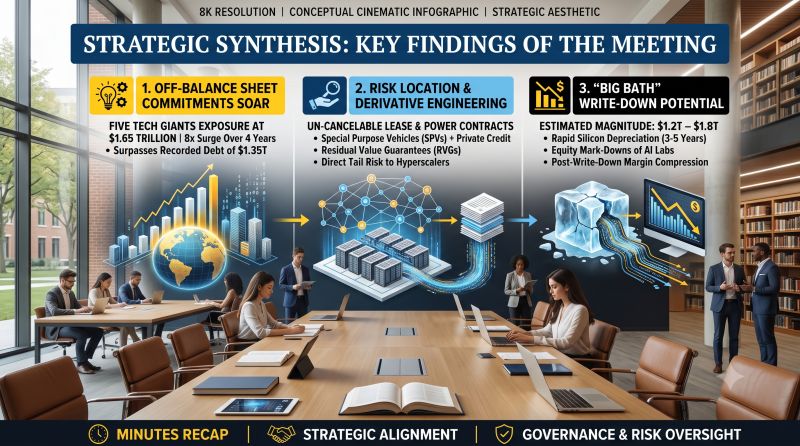
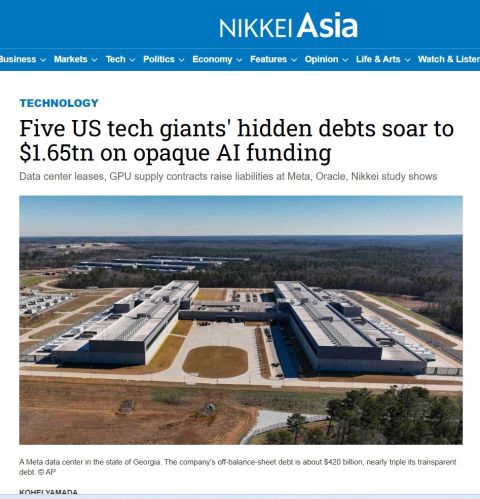
A recent analysis by Nikkei highlights a remarkable shift in how the AI infrastructure race is being financed: across five major U.S. tech leaders, off-balance-sheet commitments have surged 8x in four years to $1.65 trillion—now quietly surpassing their combined $1.35 trillion in recorded balance-sheet debt.
Let’s be precise: This is not book cooking, and it is not illegal.
It is fully compliant with GAAP (ASC 440 & ASC 842). Long-term power purchase agreements (PPAs), data center capacity leases, and joint-venture structures (SPVs) are executory contracts. By rule, they belong in the footnotes under Commitments and Contingencies until assets are commissioned.
So why does this make governance committees and institutional risk officers uneasy?
Because we have seen this financial architecture before.
In 2007, off-balance-sheet SIVs (Structured Investment Vehicles) and liquidity backstops met every regulatory accounting threshold of their time. The problem wasn't legality—it was structural fragility. When underlying asset cash flows failed to match hyper-scale projections, those executory commitments migrated back onto primary income statements almost overnight.
Today’s $1.65T AI buildout exhibits three parallel structural mechanics:
1. Derivative-Like Tail Risk: Through Joint Ventures and Private Credit partnerships, mega-cap balance sheets underwrite residual value guarantees and uncancelable lease commitments. It converts variable operational spend into rigid, long-term fixed obligations.
2. Rapid Asset Obsolescence: Unlike commercial real estate or power plants—which retain long-term residual value—AI infrastructure relies on high-end silicon (GPUs) that depreciate at lightspeed over 3 to 5 years.
3. Circular Value Loops: Capital flows from Big Tech into AI labs as equity, then flows directly back as cloud revenue. On paper, top-line growth looks stellar. In practice, it measures recycled capital, masking organic end-user demand.
The Strategic Bottom Line for Boards & C-Suite Leaders:
The threat is not a 2008-style banking collapse. Tech giants hold fortress balance sheets and legacy cash cows.
The real exposure is an accounting default cascade if monetization lags—where uncancelable off-balance liabilities come online, forcing historic asset impairments, margin compression, and severe EPS adjustments.
Compliance with GAAP protects you from the regulator. It does not protect you from the economic reality of an overbuilt balance sheet.
How is your Audit Committee or Investment Board assessing the true total leverage buried in footnote disclosures today?
The Korean version is a translation of the original.
View the original on LinkedIn ↗