
When Oscar-winning director Asghar Farhadi shared his philosophy on filmmaking, he accidentally delivered a masterclass in corporate strategy:
🎱 Think about your last major executive town hall or board meeting. As leaders, our natural instinct is to play the omniscient decision-maker. We stand at the front of the room, armed with meticulously crafted decks, mapping out a flawless path forward. We give our teams all the answers.
🎱 But here is the dangerous reality: The moment you distribute a rigid playbook, the strategy stops. The "film" finishes in the boardroom. Your team executes the directive, and then they simply wait for your next command. You haven't built an agile organization; you've built a compliance engine capped by your own cognitive limits.
🎱 When you distribute problems and frame compelling questions, everything changes. You transition from a Commander to a Catalyst. The real work—scanning the horizon for emerging threats, dismantling cognitive biases, and driving true innovation—begins after everyone leaves the room.
🎯This paradigm shift is critical across three dimensions of leadership:
♦️ The Executive Team (Combating Inertia) : Telling people what to do breeds compliance; asking them how to achieve it breeds ownership. A CEO who asks, "What assumptions must be true for our current strategy to succeed?" actively dismantles the echo chamber and uncovers systemic blind spots.
♦️ The Boardroom (Socratic Oversight): For directors, the ultimate tool of governance isn't operational micromanagement—it’s rigorous, constructive inquiry. Instead of dictating a pivot, effective boards ask questions that force executives to defend their logic. This pressure-tests the strategy and builds a culture of psychological safety.
♦️ The Market (The Open-Ended Brand): Brands that merely tell consumers what to buy are quickly commoditized. Brands that challenge the status quo and invite their market into a dialogue build enduring communities with compounding lifetime value.
🎱 Shifting from an answer-driven culture to a question-driven one takes deliberate effort, especially when teams are conditioned to expect immediate directives from the top.
⚠️But as Peter Drucker perfectly captured decades ago:
"The leader of the past was a person who knew how to tell. The leader of the future will be a person who knows how to ask."
If your organization is constantly waiting for you to yell "Action," you are directing a compliance exercise, not a company.
What is the most uncomfortable, yet productive, question you’ve asked your leadership team recently?
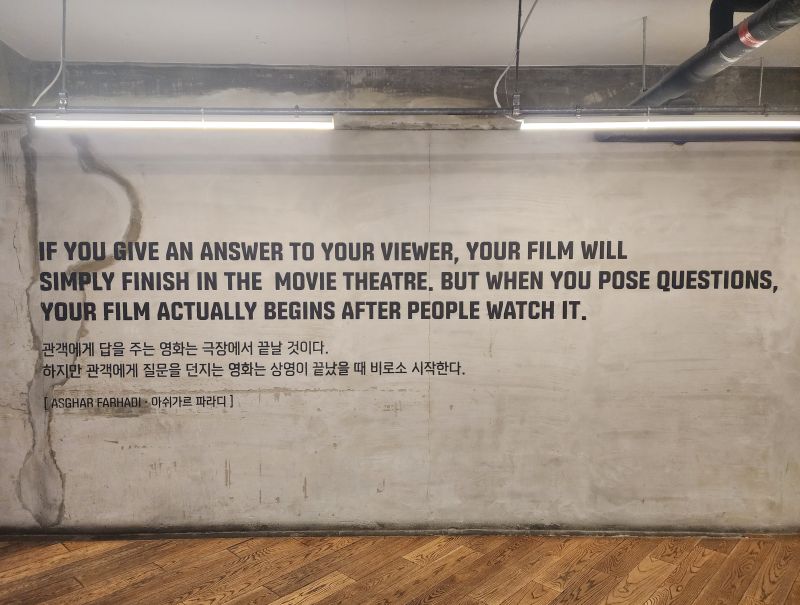
The Korean version is a translation of the original.
View the original on LinkedIn ↗