
For the past two years, boardrooms bought a simple promise: replace expensive human labor with cheap, predictable AI software.
That narrative has collapsed.
As enterprises transition from basic chatbots to autonomous Agentic AI, two massive structural collisions are rewriting the rules for executives and investors:
1️⃣ The Compute Cost Explosion 💣
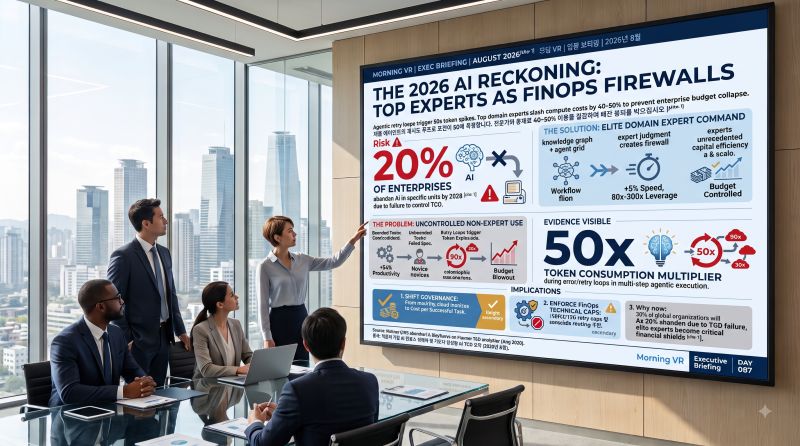
Agentic AI runs on variable compute, not flat subscriptions. When an agent hits an error, it enters a retry loop, re-processing entire contexts from scratch and driving token consumption up to 50x for a single task.
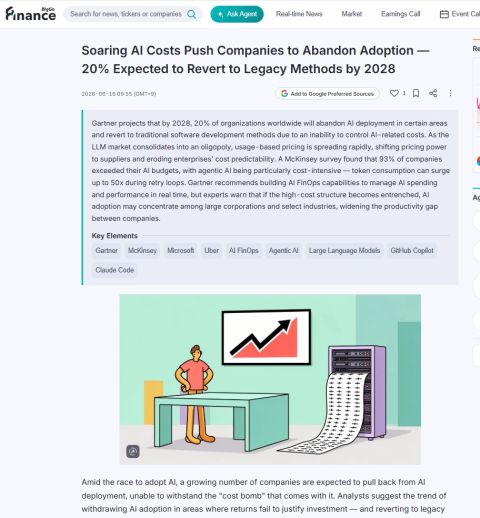
♦️ 93% of enterprises (McKinsey) have already exceeded their initial AI budgets.
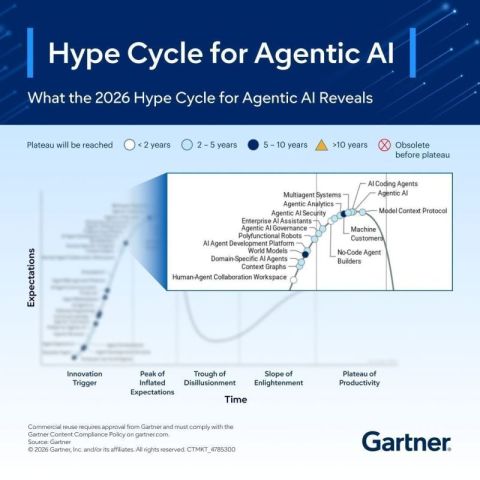
♦️ 40% of agentic projects will be canceled by 2027 due to runaway costs (Gartner).
♦️ 20% of global organizations will abandon AI in specific units by 2028 and revert to traditional legacy code due to unmanageable TCO.
2️⃣ The Human Paradox & The "Top 1%" Shield 🛡️
AI compresses the skill gap on routine tasks—boosting novice productivity by +34%.
However, on complex tasks outside AI’s capability frontier, non-experts blind-trusting AI actually perform 19 percentage points worse than using no AI at all.
Top-tier domain experts are no longer just quality drivers—they are your primary FINANCIAL FIREWALL against catastrophic token cost overruns.
♦️ The Non-Expert Penalty: Vague agent prompts trigger infinite, expensive retry loops.
♦️ The Expert Advantage: Elite "Centaur" operators bound tasks, route to cheaper SLMs, and slash token consumption by 40% to 50%.
♦️ Asymmetric Leverage: One top-tier operator now achieves the leverage of 80 to 300 traditional roles while maintaining strict cost control.
💡 The Playbook:
🎯 For C-Suite Leaders:
🔸 Implement Agentic FinOps: Track Cost per Successful Task instead of monthly cloud totals. Enforce hard token caps and retry limits at orchestration.
🔸 Protect Apprenticeships: Build structured training where mid-level talent audits and debugs AI outputs, preserving institutional expert judgment.
🎯 For VC & Institutional Investors:
🔸 Avoid the "Wrapper Trap": Fixed-price SaaS wrappers on usage-based LLM APIs face severe margin collapse and client churn.
🔸 Fund Optimization Layers: Prioritize AI FinOps middleware (semantic routing, compression) and Domain-Expert Capturing Platforms.
🎱 The Bottom Line:
The enterprise divide today isn't between companies using AI and those that aren't. It's between uncontrolled spenders reverting to legacy code, and disciplined orchestrators pairing elite experts with strict FinOps to unlock unprecedented capital efficiency.
Which side of the divide is your organization on? 👇
The Korean version is a translation of the original.
View the original on LinkedIn ↗