
For the C-Suite and the Boardroom, the "Scaling Era" of AI is officially over. We have entered the Paradox Era.
The definitive signals from The 2026 AI Paradox.pdf (distilled from the 423-page Stanford AI Index) reveal that the fundamental economics of the frontier have shifted. If you are still measuring success by GPU count and capital spend, you are watching the wrong scoreboard.
📉 1. The Capital Efficiency Collapse
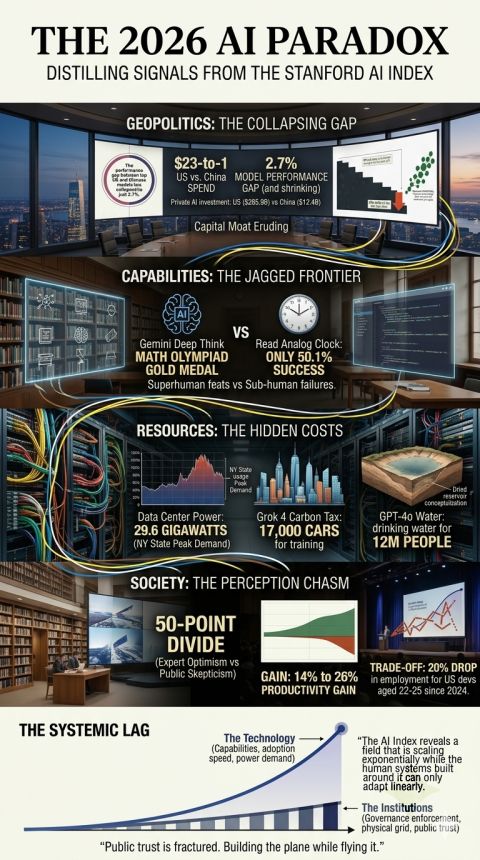
We are seeing a massive decoupling of spending from performance. The US maintains a $23-to-1 private investment lead over China, yet the model performance gap has vanished to just 2.7%.
The Moat is Moving: Intellectual capital is migrating faster than hardware can be built; the US saw an 80% decline in AI scholar migration in the last year alone.
Small is the New Big: Data-centric curation is winning. The OLMo 3.1 Think 32B model achieved parity with Grok 4 despite being 90x smaller, proving that curation—not just raw compute—is the new alpha.
⚡ 2. The Physical Chokepoint
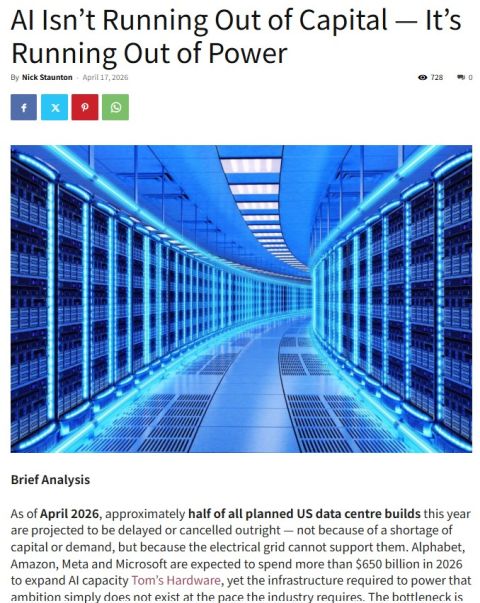
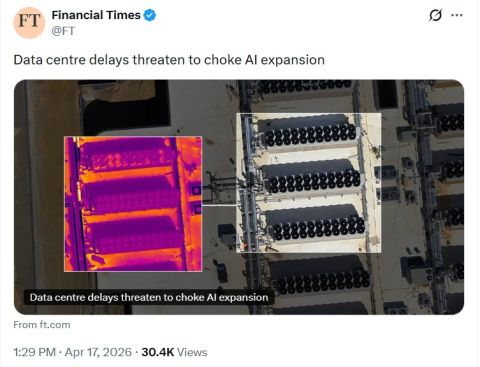
Your AI roadmap is hitting a linear wall. While capabilities scale exponentially, our physical infrastructure is lagging.
Energy Hunger: AI data center capacity has reached 29.6 GW, matching the peak demand of the entire state of New York.
Supply Chain Fragility: Nvidia controls 60% of global compute, and the entire ecosystem remains critically dependent on a single foundry: TSMC.
👥 3. The 50-Point Perception Chasm
There is a profound "Systemic Lag" between those building the tech and those living with it.
The Workforce Paradox: AI has delivered 14%–26% productivity gains, yet it has simultaneously caused a 20% drop in employment for entry-level developers (ages 22-25) since 2024.
The Trust Gap: 73% of experts are bullish on AI’s impact on jobs; only 23% of the public agrees. In the US, trust in government regulation is at a global low of 31%.
🎯 The Bottom Line for the Board
The innovation pipeline is becoming a "black box"—80 of the top 95 models released in 2025 hid their training code entirely. In an environment of diminishing transparency and rising environmental taxes, the winners will be those who prioritize Data Quality over Data Volume and Systemic Resilience over Brute Force Scaling.
The Paradox: We are building the plane while flying it, but the runway (public trust and physical grid) is shorter than we think.
The 2026 AI Index report : https://lnkd.in/g_xeVRut
The Korean version is a translation of the original.
View the original on LinkedIn ↗